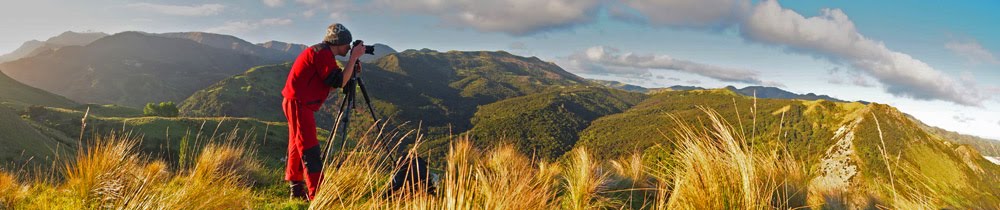
Sirui T-025 – My Impression after Tests in the Himalayas

W związku z bardzo duzym zainteresowaniem opisami obiektywu i statywu oraz pytaniami po angielsku jakie dostałem na jego temat ponizej zamieszczam tłumaczenie :


Tripod is an inseparable element of photography. It brings an added value and gives more options of taking photos. It allows the use of long or even very long exposure – impossible to do without a tripod. Other techniques that may be applied include HDR or multiple exposure where several shots are put together and often you need exactly same frames with different parameters of exposure. Tripod allows the use of longer focal length, where without a support of a tripod you have no chance of taking photos that are not blurred. Tripod ensures better stability.

Also, you can use a tripod for panoramic photos, to make time lapses, etc. Even with short exposure seemingly possible to do with no support after comparing such photos with photos taken in identical conditions, but with the use of a tripod, the latter will turn out to be of much better quality.

Every tripod has, however, some downsides, namely its weight, size and the fact that you have to carry it around.

The old rule says that the heavier the tripod the better for photography, but not so good for carrying. You hit the nail on the head when you find a golden mean or….

Or you can use advanced technologies applied for many years in Formula 1 or aviation. Namely, you can get a carbon fibre tripod.

When I gathered equipment for my last trip to the Himalayas, the main requirement was lightweight and stable tripod.
My choice was  


Sirui T-025 with C-10 Ball Head

made available to me through the courtesy of Delta (FotoTip).


It is compact, lightweight, with the head weighing 800 gram (!!!!) while my usual choice, Manfrotto, weighs with the head is more than 4 kg. Because I had with me the whole 4/3 micro system, carrying around a 4-kilo tripod would be rather much.

On the other hand, 800-gram tripod is almost unnoticeable. It weighs less than my Zuiko 50-200 lens which is in my bag basically all the time.

After a month with this tripod, I can say that I love it.

It is really solid. Extremely light as already mentioned. Its legs may be spread really wide, so the central column starts just above the ground – a great solution, as stability of the tripod is then amazing.

When the legs are spread at the maximum angle, it looks like this:


Always, when I look at such type of picture the tripod seems awkward, very high and the central column looks extremely extended. It is however a false impression. Below, the same photo with the lengths given:

As you can see, from the place where the head is fixed the distance to the ground is 28 cm, and to the camera fastening, about 36 cm.


It is not high, not unstable, and certainly not awkward.


Thanks to the blocking system on the hinges of the tripod legs, the legs may be set at different angles – starting from very wide, through intermediate positions, to a very sharp angle, as shown below. The blocking system of the tripod legs is very simple and solid. I really like such solutions – the simpler the better, as less can go wrong with it. The blocking system is reliable and strong.


The legs may be set as shown below:


The way the tripod is folded is also an excellent solution. The tripod legs turn by 180 degrees, so when they are folded they are parallel to the central column. Such solution makes this tripod extremely small after folding. It is so little that it can be easily carried attached to a belt and it does not restrain your movements. In its folded form, this tripod is extremely small and lightweight, its length is about 30 cm, and after unfolding it becomes a proper tripod:


I’ve heard some criticism of such method of folding a tripod, and I was sceptical for a while, but after using it for a short time I think it is a really good, innovative solution. The fact that this tripod uses different techniques from what we might be used to should be seen as a virtue, not a fault. It is an innovation enabling folding a piece of equipment from 140 cm to a package about 30 cm in length.
As to the dimensions significant for the owner of the tripod, it looks as follows:
length of the column is adjustable from 20 to 40 cm
legs are adjustable from 30 to 100 cm
The whole tripod with minimum leg extension and maximally wide angle has 28 cm from the ground to the end of the tripod, and 36 cm including the head.
Maximally extended legs and acute angle gives you 128 cm without the head, and 137 cm with the head. It was certainly sufficient for all my needs.
Blocking the legs with knobs is also a good solution. They are easy to use, nice to touch and solid rubber knobs. Loosening them allows you to extend the legs or the central column, and tightening blocks the elements.


Additionally, under the tripod there is a hook on a spring. A very useful feature as you can always hang something heavy (a rucksack) and add ballast to the tripod – it can come in handy in strong wind conditions, I used it several times when the wind was picking up.


Using the tripod in very low temperature is also quite pleasant. Touching elements made of carbon fibre is not as bad as touching metal. Apart from that, the legs have foam pads, so even at night with really low temperatures I was able to use the tripod without gloves. This would be unthinkable with fully metal tripod, when your hands go numb after a short while, and if your hands are slightly damp they might even freeze to the metal. With this tripod, you’ll have no such problem.


COLUMN AND HEAD


Now a few words about the column and the head
Extending and blocking the column is solved in the same way as with the legs. As I said before, it is an easy, reliable solution, and the knob does not look like cheap plastic, but really solid element. I am convinced of it after a month of very intense use of this equipment day after day, during trekking in the Himalayas, quite demanding trip in rather unfavourable conditions for the equipment (temperatures ranging from +3- to -10°C, rain, dust, etc.), I had no problems in using this solution.


The column ends with a round ‘plate’ made of plastic, and a 3/8 inch stainless steel thread. It is a standard size used in photography, in particular in spots where a head is fixed to the tripod legs. Another standard is 1/4 inch, and this thread is used in such places as camera body. Thus, normally fixing a camera directly to a tripod is not possible (thread bigger than 3/8 inch). Here, the SIRUI tripod comes as another surprise. The thread may be easily changed from the bigger one to the smaller one, as the manufacturer equipped the tripod with a double thread, making the tripod very flexible. A change from 3/8 to 1/4 takes only seconds:


First you loosen the plate, then you take out a screw with thread on two sides, one with bigger and one with thinner thread.
The C-10 head is also good quality. When you hold it in your hands, you can feel it is reliable, solid, and well thought through.
The first thing worth mentioning is the fact that the head is equipped with two independent knobs. It is a basic functionality, because when you want to use the head to make panoramas, on the one hand you need to have the camera blocked in a desirable position, and on the other you have to be able to turn it around a vertical axis. Two independent knobs make this possible. As can be seen on the photograph, the knobs on the head also have a rubber layer. After a month of intense use, the rubber is still in a perfect condition and still has good grip.


Apart from the two knobs, the head has also an angular scale and additional knob for fixing the quick release plate.
The quick release plat is tiny just like the head. It is fixed to the head in something that looks like a vice. Turning the screw widens or tightens the vice, and enables connecting or disconnecting the quick release plate. At first, there was one thing that bugged me – every time when I wanted to fix the quick release plate to the head, I would first turn the ‘vice’ for a while, but then I realised that it made no sense! It is enough to loosen the vice a little, and you can slide the camera into the vice. Another important feature is the blocking system preventing accidental falling out of the camera from the quick release plate. It is another proof that the whole thing is well thought through and is focused on practicality for the user. The only minus I noticed would be the way the quick release plate is fixed to the camera – to do this you need a screwdriver, although a coin will do. It is not a huge difficulty, as I always carry a coin in my pockets, but Manfrotto’s solution is definitely better.


The whole system is really tiny, to give you an idea – a photo next with an AA battery.


The times when MADE IN CHINA was a synonym of shoddy are long gone. China is the number one economy, and sends all over the world huge numbers of high quality products at prices much lower than the price of brands with established position in the market and well known among the consumers. In terms of quality, however, the gap between those products is insignificant. With my E system I use Manfrotto tripod, I also had Gitzo, but faced with a choice, I would go for much cheaper alternative, solidly made and offering exactly the same features. I would use the money saved on a photography trip.

To sum up, the tripod is an excellent solution for photographers who want reliable lightweight equipment. It is excellent value for money, when you compare analogous tripods manufactured by brands known in Europe for years. For mirrorless interchangeable-lens cameras, at the moment I would not use any other tripod.

It is a little different in case of DSLRs - although PEN with ZD 50-200 works well with this tripod, very heavy camera with large lens would be too much for it. I used it to support a camera weighing around 1500 grams (E3 + 14-54)


However, you have to remember that with large body DSLR you would add to it a long focal length lens. And although large DSLR with ‘standard’ lens will work well with this tripod, the same camera with a large lens will not. In my opinion, this tripod is ideal for mirrorless interchangeable-lens cameras and small DSLRs, like E410, and not for giants like E3 or E5. With all that said, I had hard time finding any flaws in this tripod.


Still reading? Join in more discussion on facebook

Samyang 7.5 1:3.5 UMC Fisheye MFT - test and opinion


W związku z bardzo duzym zainteresowaniem opisami obiektywu i statywu oraz pytaniami po angielsku jakie dostałem na jego temat ponizej zamieszczam tłumaczenie :

Introduction.


Thanks to the courtesy of FotoTip, the exclusive distributor of Samyang lenses, I had a pleasure of testing this lens for almost a month, during my last trip to the Himalayas in Nepal.
Making a decision to take a fisheye, 7.5 mm with u4/3, I had doubts that I made a right choice. In general, fisheye lenses are interesting, although they have to be used in moderation. Presentations where 60% of shots are taken with a fisheye are rather hard to watch. More so, in my bag next to the fisheye I had ZD 9-18, a lens which I really like for its parameters and wide angle.
Luckily, Samyang 7.5 is not very heavy. The lens with caps is about 200 gram, more or less like two bars of chocolate.
Many respectable photographers say that it is better to have one more lens with you than later regret that you can’t do something. As it turned out, I did not regret my decision, and even can say that some shots would not be possible without this lens.
On the other hand, many experienced photographers say that taking too much equipment is unnecessary, as you cannot become a porter. If it turns out that your ability to take photos is limited due to gigantic weight of your bag, carrying so much equipment is pointless.
Small weight of this lens, however, makes it easy to throw it in a bag.

Constrution. 

The lens is really quite solid. At the first sight and touch, I was sure that the whole lens is made of metal – like old, trusted lenses for analogous cameras.
After a while it appears that the rings and the sun protector are made of plastic, however, its quality is sufficient to make this lens a solid product.
The lens is really small – typical lens for u4/3, however you have to remember about the angle of this lens while taking photos. Its small size makes it easy to include fingers of the photographer in the shot. Many times I forgot about it setting the focus, and my fingers ended up in the shot… After a while, of course, I got used to the size of the lens and watched where my fingers were.


There are two rings on the body, one for distance setting, and one for the aperture. The focus ring has a really nice resistance to it, and enables regulation from 9 cm to infinity. The aperture ring is adjustable by 1/2 EV between f3.5 and f22. Between them, there is a red metal ring. The whole thing is really decent and solid. The only thing I missed from analogous lenses was a scale showing on the ring the distances of the depth of field at a particular aperture setting. It is, however, only an insignificant detail.


The lens on the side of the mount also looks good. The mount is made of metal. The fact that the sun protector slightly wears off from repeated putting on and taking off the cap, may be treated as a weak point. However, for a photographer, it should not be important. From the point of view of aesthetics it could bother some people or slightly decrease the value of the lens if it was to be sold, but from the point of view of its application it does not matter. The equipment is for taking photos, and not looking at it.


.


The front lens is slightly convex, but it is secure thanks to the protector in the form of four leaves surrounding the lens. A filter cannot be fitted on the lens, as it is not equipped with a thread. It is normal with this focal length, as vignetting would be horrible with most additions due to the angle of view of this lens.


Showtime.

It took some time for me to get used to this lens. First, I had a problem with my fingers constantly getting in the shot; then due to my absent-mindedness it turned out that I was taking photos with stabilization enabled which resulted is photos not as sharp as they could have been. After a short while, however, the lens was under control.
As I said before, a fisheye in my opinion is a lens which may be used from time to time to break the monotony of the shots with normal rectilinear lenses.
This is caused by characteristic distortion of everything by this type of lens.
Another reason for a fisheye lens to be always in my bag is creating spherical panoramas. With this lens, 360x180 panoramas are much easier to do than with narrower angles. With less individual photos, the chance of getting something wrong is lower, no matter if it would be caused by your mistake or, for example, a change of light. Taking a small number of photos takes less time, so you have a good chance to finish a panorama before the light changes. Additionally, minimising the number of shots saves time at the stage of processing.


Panoramas made with this lens and PEN, Samyang 7.5 MFT and Dobas-01 head for panoramas, gave surprisingly good effects. The quality of panoramas was comparable to those taken with Olympus E3 and ZD 8mm lens. The weight of the equipment used was on the other hand much different – I could clearly feel it claiming moraines on the glaciers above 4000 m. I can honestly recommend this set as lightweight equipment with large capabilities for spherical panoramas. Placing the thread in the PEN caused some difficulty, but I can tell you about it some other time.


Samyang surprised me in many different aspects.
I have the impression that the degree of distortion is lower than in case of other fisheye type lenses I had used before. For me it is a huge virtue, as it makes this lens much more universal than most ordinary fisheyes. What is more, in case of every fisheye, when the camera is places horizontally, with the horizon exactly in the middle of the shot – distortions caused by the lens will be minimal. In case of this Samyang, photos are just ultra-wide shots.


Another thing which made me love this lens is its work against the light. I could include the sun (not covered at all) in the shot. The effect was amazing and made me use this lens for wide-angle landscape shots with the sun in the frame.


Focus of this lens is excellent. Chromatic aberration is also insignificant.
Obviously, this lens does not have autofocus. This is not, however, a problem when you can get the depth of field from a few cm to infinity.


Summary.


Fisheye type lens is very specific. People often buy one, use it for a short time, and sell it bored with the barrel distortion. This happened to a lot of my friends. This Samyang, however, apart from the distortion characteristic for a fisheye lens, has many other applications. It is excellent as wide-angle lens which can be used successfully with landscape photography.


This lens is a solidly made piece of equipment with good functionalities, not limiting you to just distorted shots. Taking photos against the light with this wide-angle lens is addictive :) Focus is very high, aberration very low – this is rather an exception among fisheye lenses. And if you want to create a panorama, this small lens will be excellent for making virtual tours. If you like wide-angle lenses you will not find a better one for this kind of money, so you should not hesitate. If you take into account the value for money factor, I would say that this is one of the best fisheyes I have ever used.


Still reading? Join in more discussion on facebook

.

Ośmiornica - mieszkaniec rafy...

Anglojęzyczna Wikipedia przy tym zwierzęciu opis zaczyna od szeregu trudnych i obraźliwych słów takich jak "cephalopod" lub "mollusc" - juz z samej nazwy widać że to jakieś obrzydlistwo ;) 


Nie dość że mięczak ( mollusc ) to jeszcze do tego głowonóg ( cephalopod ) 
Osiem ramion, połączonych błoną, każde ramie wyposażone w przyssawki. Wielka głowa a więc i wielki mózg.


To straszliwie mądre zwierzęta. To, że należą do głowonogów - nie wydaje sie być zaskoczeniem jednak, to co potrafią wyczyniać pod wodą jest już interesujące...

Cechą charakterystyczną i budzącą chyba największe zdumienie jest umiejętność zmiany koloru (mimikra)
Zwierzak jest w stanie zmienić kolor w mgnieniu oka, potrafi - czego byłem świadkiem -  zmienić na przykład tylko kolor połowy ciała. Na mój widok z jednej strony ośmiornica zabarwiła się na biało z drugiej cały czas była czerwona a kolory oddzielała od siebie prosta równa linia..

 Oprócz zmiany koloru, faktury układają też ramiona odpowiednio aby naśladować ryby, węże itp itd..

słowem wielki mózg i wielkie umiejętności i piękne zwierze...

Rafa koralowa - miejsce, w którym można spotkać wtapiające się w tło ośmiornice...

potrafią skryć się w zakamarkach "udając fragmenty rafy "

Zmiana koloru nie jest żadnym problemem

Na wszystkich zdjęciach jest jeden i ten sam zwierz, który w zależności od otoczenia zmienia kolor i fakturę skóry


Samyang 7,5 1:3.5 UMC Fish-eye MFT


Wstęp.

Dzięki uprzejmości firmy FotoTip – wyłącznego dystrybutora obiektywów Samyang miałem możliwość testowania tego obiektywu przez prawie miesiąc podczas ostatniej wyprawy w Himalaje Nepalu.


Decydując się na zabranie obiektywu typu fisheye jakim jest 7,5 mm do u4/3 miałem dość duże obawy czy na pewno jest to decyzja słuszna. Obiektywy typu rybie oko są obiektywami ciekawymi, ale nie da się ukryć że stosować je należy z umiarem. Ciężko ogląda się pokaz gdzie
60 % fotografii wykonane jest właśnie tego typu obiektywem. Zwłaszcza, ze w torbie oprócz fisheye leżał jeszcze ZD 9-18 – obiektyw który bardzo sobie chwalę i za parametry i za kąt widzenia jaki oferuje.


Na szczęście Samyang 7,5 nie jest jakimś gigantycznym ciężarem. Samo szkło wraz z dekielkami to waga około 200 gram więc dwóch tabliczek czekolady.
Wielu fotografów których bardzo szanuje za twórczość powtarza, że lepiej mieć w torbie za dużo niż potem żałować że czegoś nie jesteśmy w stanie zrobić. Jak się okazało nie żałowałem decyzji a nawet kilka kadrów nie miało by możliwości powstać gdyby nie ten obiektyw.
Z drugiej strony też wielu szanowanych przeze mnie fotografów mówi, że nie ma co dźwigać masy sprzętu bo nie można zamieniać się w tragarza. Jeśli okaże się że nie mamy możliwości swobodnie fotografować z powodu gigantycznego ciężaru torby dźwiganie szpeju nie ma sensu :)

Na szczęście waga tego obiektywu sprawia że spokojnie można wrzucić go do torby.

Budowa.

Obiektyw wykonany jest bardzo ale to bardzo przyzwoicie. Na pierwszy rzut oka i dotyk ręki przekonany byłem że jest cały metalowy - jak stare poczciwe szkła od analogowych aparatów.
Po krótszej chwili okazuje si ze pierścienie i osłona przeciwsłoneczna wykonane są z plastiku jednak jego jakość jest na tyle przyzwoita ze z powodzenie można pochwalić budowę tego obiektywu.


Obiektyw jest malutki – Typowe szkło do u4/3 – takie jak powinno być w tym systemie – choć należy pamiętać o kącie widzenia tego obiektywu podczas robienia zdjęć. Mały rozmiar niestety ułatwia aby w kadrze znalazły się niechciane palce fotografującego :) Wielokrotnie ustawiając ostrość zapominałem się i niechcący wkładałem palce w kadr... Oczywiście po jakimś czasie przyzwyczaiłem się do rozmiaru obiektywu i rzadziej popełniałem ten błąd,


Na korpusie znajdują się dwa pierścienie – jeden od ustawiania odległości drugi od przysłony. Pierścień ostrości chodzi z baaaardzo fajnym przyjemnym oporem i daje możliwość regulowania od 9cm do plus nieskończoności. Pierścień przysłony regulowany jest skokowo od f3,5 do f22 ze skokiem co 1/2 EV. Pomiędzy nimi znajduje się czerwony metalowy pierścień. Całość wykonana naprawdę w sposób budzący zaufanie i bardzo solidny. Jedyne czego mi brakowało to znanej z analogowych obiektywów podziałki pokazujących na pierścieniu odległości zakresu głębi ostrości przy ustawieniu danej przysłony. Jest to jednak drobiazg.


Obiektyw od strony bagnetu również wygląda bardzo solidnie. Bagnet wykonany jest z metalu. Za pewien mankament można uznać fakt, że osłona przeciwsłoneczna delikatnie wyciera się od ciągłego zakładania i zdejmowania dekielka. Jednak wydaje mi się że dla fotografa nie powinno mieć to żadnego znaczenia. Oczywiście z punktu widzenia estetyki może to komuś przeszkadzać czy delikatnie obniżać wartość podczas sprzedaży używanego obiektywu – ale z punktu widzenia wartości obiektywu nie ma to żadnego znaczenia. Sprzęt służy raczej do fotografowania a nie do trzymania w gablotce


.


Przednia soczewka jest delikatnie wypukła ale osłona w postaci 4 listków otaczających soczewkę zapewnia jej ochronę. Na obiektyw nie można nakręcić filtra gdyż nie jest on wyposażony w gwint. Jest to normalne przy tej ogniskowej bo czego by nie zakręcić winietować musiało by strasznie ze względu na kąt widzenia obiektywu


Czas na zdjęcia.

Trochę czasu zajęło zanim oswoiłem się z tym obiektywem. Najpierw problem miałem z palcami, które ciągle wkładałem w kadr, potem w wyniku mojego roztargnienia okazało się, że robiłem zdjęcia z włączona stabilizacją która sprawiała że zdjęcia nie były tak ostre jak mogły być. Po krótkim czasie jednak obiektyw został okiełznany.


Jak wspomniałem wcześniej – obiektyw typu rybie oko uważam za obiektyw który od czasu do czasu można wykorzystać przełamując monotonie ujęć ze zwykłych obiektywów rektilinearnych.

Powodem jest charakterystyczne wykrzywianie wszystkiego przez tego typu obiektywy.


Kolejnym powodem dla którego obiektywy typu fisheye znajdują miejsce w mojej torbie są panoramy sferyczne. Mając taki obiektyw wykonanie panoramy 360x180 jest dużo prostsze niż wykonanie za pomocą obiektywów o mniejszym kącie widzenia. Mamy mało zdjęć składowych więc małe szanse na pomyłkę, czy to naszą czy choćby spowodowaną zmianą oświetlenia. Skoro robimy nie wiele zdjęć zajmuje nam to mało czasu więc mamy szanse na skończenie panoramy zanim zmienią się warunki oświetleniowe. Dodatkowo zminimalizowanie ilości zdjęć pozwala nam na zaoszczędzenie czasu podczas obróbki.


Panoramy, które wykonywałem tym obiektywem korzystając z PENa, Samyanga 7,5 MFT i głowicy do panoram dobas-01 dały zaskakująco dobre efekty. Jakość panoram nie odbiegała w żaden sposób na niekorzyść od tych wykonywanych Olympusem E3 i obiektywem ZD 8mm. Natomiast waga wykorzystywanego sprzętu była bezkonkurencyjna – co odczuwałem wdrapując się na moreny lodowca powyżej 4000 m n.p.m. Z czystym sumieniem mogę polecić ten zestaw jako mały sprzęt z dużymi możliwościami jeśli chodzi o panoramy sferyczne. Pewnego utrudnieniem jest umiejscowienie gwintu w PENie ale o tym napiszę przy innej okazji


Samyang zaskoczył mnie pozytywnie pod wieloma względami,


Odnoszę wrażenie, że stopień zniekształcania jest mniejszy niż w przypadku obiektywów typu fisheye z którymi miałem styczność. Dla mnie jest to olbrzymia zaletą , ponieważ sprawia, że ten obiektyw jest dużo bardziej uniwersalny niż gdyby był ordynarnym rybim okiem. Co więcej w przypadku każdego fisheye jeśli aparat umieścimy poziomo, tak aby horyzont znalazł się dokładni w połowie kadru – zniekształcenia generowane przez szkło będą najmniejsze. W przypadku ego samyanga- zdjęcia są po prostu ultra szerokokątnymi ujęciami.


Kolejną rzeczą która mnie zachwyciła w tym obiektywie jest jego praca pod światło. Spokojnie mogłem umieszczać słońce ( i to niczym nie przysłonięte ) w kadrze. Efekt, który uzyskałem był oszałamiający i spowodował że głównie wykorzystywałem to szkło do szerokich ujęć krajobrazowych ze słońcem w kadrze.


Nie mam najmniejszych zastrzeżeń do ostrości tego obiektywu. Ani do aberracji chromatycznych, które też są na bardzo niskim poziomie.

Autofocus – oczywiście w tym obiektywie nie występuje. Nie ma to najmniejszego znaczenia w przypadku, gdy jesteśmy w stanie uzyskać głębię ostrości od kilku cm do plus nieskończoności.


Podsumowanie.


Obiektyw typu fisheye jest obiektywem bardzo specyficznym. Ludzie często kupują tego typu obiektywy, korzystają z nich przez krótki czas po czym sprzedają znudzeni efektem beczki. Taki los spotyka większość obiektywów z których korzystali moi znajomi. Ten Samyang jednak oprócz charakterystycznego dla rybiego oka efektu jest szkłem które ma masę innych zastosowań. Doskonale sprawując się się jako szerokokątne szkło z powodzeniem stosowane choćby przy krajobrazach.


Jest to na prawdę bardzo solidnie wykonany obiektyw z bardzo dobrymi wynikami a ponadto nie ograniczający nas tylko do pogiętych ujęć. Zaś fotografowanie pod światło szerokokątnym obiektywem wciąga :) Ostrość jest na bardzo wysokim poziomie aberacje na bardzo niskim poziomie - co jest rzadkością w przypadku obiektywów rybie oko. Jeśli zajmujemy się również tworzeniem panoram – to to małe szkiełko również wspaniale sprawdzi się podczas tworzenia wirtualnych wycieczek. Słowem jeśli lubimy szerokokątne obiektywy za te pieniądze nie ma się co wahać tylko trzeba ten obiektyw sobie sprawić. Jesli weźmiemy pod uwagę stosunek ceny do jakości - pokuszę się o stiwerdzenie że to jeden z lepszych "fiszajów" jakie miałem w ręku

"Doczytałeś" tutaj ? zapraszam na facebooka

.

Annapurna - panorama sferyczna

Parę dni temu prezentowałem płaskie panoramy (panoramy cylindryczne ) wykonane w okolicy Annapurna Base Camp'u Płaskie panoramy, ktorych zaletą bylo ukazanie duzego wycinka gór oraz gigantyczna rozdzielczość Dziś troszkę inne podejście do panoram - czyli panorama sferyczna pozwalająca na "rozglądanie się po okolicy" Dziwny twór z pogranicza fotografii i multimediów Jak to zrobić? Wystarczy najechać myszką na panoramę i trzymając lewy przycisk myszy przesunąć kursor tam, gdzie chcemy spojrzeć. Z kolei guzikami CTRL / SHIFT możemy przybliżać i oddalać

Warto ogladać w wersji pełnoekranowej - bo jest zdecydowanie lepszy efekt


Wersja Pełnoekranowa


Fotografie sklejone z pionowych kadrów wykonanych z wykorzystaniem obiektywu Samyang 7,5 1:3.5 UMC Fish-eye MFT
Olympus PEN E-PL1, Statyw SIRUI T-025, głowica do panoram DOBAS-01

Facebook i RSS

Idąc z duchem postępu i nowoczesności ( bo nie mozna inaczej )
pora oprócz RSSa wprowadzić stronę na Facebook'u


Tak więc chcąc być na bieżąco z publikowanymi postami za pomocą czytnika RSS należy kliknąc w poniższą ikonkę koloru pomarańczowego i na wszystko się zgadzać.


Z kolei chcąc być na bieżąco za pośrednictwem twarzoksiążki ( face book ) nalezy kliknąc na ikonkę niebieską i również na wszystko się zgadzać albo wszystko lubić . Ikonka niebieska przekieruje na "funpage" więc jesli ktoś chce zasubskrybować nowości należy klinknąć LIKE

Dodatkowo po prawej stronie pojawił sie bezposredni link to facebooka